Bar soap remains an established product in both personal care and household cleaning markets. From bath and baby soap to laundry soap, different formulations serve different applications and consumer needs. For brands, retailers, wholesalers, and distributors, sourcing the right soap bar involves more than choosing a product size or fragrance. Buyers also need to consider formulation, product specifications, packaging, customization requirements, and supplier capabilities.
Whether you are introducing a new soap product or expanding an existing range, understanding the main types of bar soap and the sourcing process can help you make better purchasing decisions. This guide covers key product considerations and practical steps for working with a private label bar soap manufacturer.
Quick Answer: Bar soap is a solid cleansing product available in different formulations for personal care and household applications. When sourcing bar soap for a private label brand, buyers should evaluate its intended use, formulation, fragrance, weight, dimensions, packaging, MOQ, and manufacturer capabilities. Clear product specifications and sample approval are important steps before bulk production.
Key Takeaways
- Bar soap includes different product categories for bathing, baby care, laundry, and other applications.
- Formulation and product specifications should match the intended use and target market.
- Fragrance, shape, weight, color, and packaging are common areas to discuss for private label customization.
- Buyers should review samples, product specifications, documentation, MOQ, and lead time before confirming an order.
- A suitable manufacturer should be able to communicate clearly about product requirements, customization, and order arrangements.
1. What Is Bar Soap?
Bar soap is a solid cleansing product generally supplied in molded or shaped units. Depending on its formulation and intended application, it can be developed for personal cleansing, such as bathing and handwashing, or household cleaning, such as washing clothes.
Compared with liquid soap, a soap bar does not require a bottle or pump dispenser. Its compact format and flexible packaging options make it suitable for various retail and distribution channels. Product differentiation can be achieved through formulation, fragrance, color, shape, weight, and packaging design.
For B2B buyers, the first step is to identify the product's intended application. A bath soap and a laundry soap may both be solid bars, but their formulations, usage instructions, and labeling requirements are not necessarily interchangeable.
2. Common Types of Bar Soap
Bar soap can be classified according to its intended use and target consumer group. Understanding these categories helps buyers select products that fit their product portfolios.
Bath Soap
Bath soap is designed for personal cleansing during bathing or showering. Buyers may evaluate its cleansing characteristics, fragrance, lather, skin feel, and formulation according to their target market and product positioning.
Baby Soap
Baby soap is developed for products targeting infant and baby care markets. Formulation, ingredient selection, fragrance, and labeling require careful consideration. Buyers should review the final formulation and supporting documentation before making claims about suitability for babies or sensitive skin.
Laundry Soap
Laundry soap bars are intended for washing clothes and treating certain stains. Important purchasing considerations include the intended fabric applications, usage instructions, product size, and packaging format. Buyers should confirm the product's stated uses rather than assume that all soap bars provide the same cleaning performance.
Beauty and Specialty Soap
Beauty and specialty soap bars may be developed around specific consumer preferences, fragrance profiles, appearance, or formulation requirements. Their product positioning should be supported by the actual formula, specifications, and applicable labeling.
These categories serve different purposes. Buyers should select a product based on its intended application instead of relying on the general term "bar soap" alone.
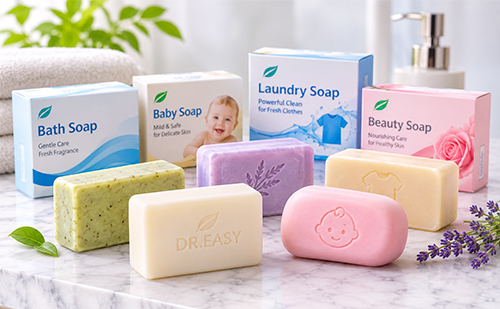
Different bar soap categories for personal care and household applications.
3. What Determines Bar Soap Specifications?
Product specifications define what a buyer expects from a soap bar and provide a reference for sampling, quotation, and bulk production. Before contacting a manufacturer, it is useful to understand the main specification areas.
Formula and Ingredients
The formulation should be appropriate for the product's intended use. Buyers can discuss ingredient preferences, cleansing requirements, fragrance considerations, and any market-specific restrictions. For baby and personal care products, ingredient and labeling requirements deserve particular attention.
Fragrance and Appearance
Fragrance, color, shape, and surface appearance influence product presentation and brand identity. Buyers should communicate their preferred scent profile and visual direction, while confirming whether the requested options are available for the selected product.
Weight and Dimensions
Unit weight and dimensions affect product positioning, packaging selection, shipping arrangements, and retail presentation. Buyers should specify the required bar weight and dimensions and confirm that the final sample matches the agreed specifications.
Physical Characteristics and Storage
Characteristics such as hardness, lather, dissolution behavior, and appearance during use may be relevant depending on the soap category. Storage and packaging conditions should also be considered to help maintain the product's condition during transportation and distribution. Evaluation criteria should be selected according to the product's intended application.
4. Key Factors to Consider When Sourcing Bar Soap
Once the product requirements are defined, buyers should prepare a clear sourcing brief. This helps manufacturers understand the project and provide a more relevant quotation.
| Purchase Item | What Buyers Should Confirm |
|---|---|
| Product application | Bathing, baby care, laundry, or another intended use |
| Product specifications | Formula requirements, unit weight, dimensions, and appearance |
| Fragrance and design | Scent profile, color, shape, and logo presentation |
| Packaging | Individual wrapping, cartons, labels, and retail pack format |
| Order terms | MOQ, quotation, payment terms, and estimated lead time |
| Documentation | Product specifications, ingredient information, and destination-market documents |
Buyers should also identify the destination market at the beginning of the project. This allows the manufacturer to discuss relevant product information, labeling, and documentation requirements before packaging artwork and production details are finalized.
5. Private Label Bar Soap: OEM and ODM Options
Private label manufacturing allows brands to sell soap products under their own brand names without operating their own manufacturing facilities. Depending on the manufacturer's capabilities, projects may follow an OEM or ODM approach.
OEM Manufacturing
OEM projects generally start with buyer-defined product requirements. The buyer provides a product brief, specifications, or an existing reference, and the manufacturer evaluates how the requested product can be supplied and customized.
ODM Manufacturing
ODM projects may involve selecting from a manufacturer's existing product options and adapting suitable details for a brand. This can be relevant for buyers who have a product concept but need to discuss available formulations, fragrances, sizes, or packaging formats.
Common Customization Areas
Depending on the product and manufacturing capabilities, buyers may discuss the following options:
- Formula: Ingredient preferences and application-specific requirements.
- Fragrance: Scent profiles and available fragrance options.
- Appearance: Color, shape, size, and product weight.
- Branding: Logo, product name, and label design.
- Packaging: Individual wrappers, cartons, and retail packaging formats.
Not every option is suitable for every soap product. Formula changes, packaging materials, and special requirements should be evaluated with the manufacturer before sampling and quotation.
6. How to Choose a Reliable Bar Soap Manufacturer
Choosing a manufacturer involves more than comparing unit prices. Buyers should evaluate whether a supplier can meet the product requirements and communicate clearly throughout the sourcing process.
Product Experience and Specifications
Ask about the manufacturer's experience with the specific soap category you intend to purchase. Review available product information, specifications, and relevant samples. Experience with personal care soap may differ from experience with laundry soap.
Sample Review and Product Consistency
Request samples before confirming a bulk order. Compare the sample with the agreed requirements, including weight, dimensions, fragrance, appearance, and packaging. Establishing clear specifications provides a reference for evaluating subsequent production batches.
Documentation and Market Requirements
Confirm which product information and export documents the supplier can provide. Requirements vary by product type and destination market, so buyers should identify applicable regulations and verify that product claims and labels are supported by the relevant information.
MOQ, Lead Time, and Communication
Discuss minimum order quantities, pricing, sample arrangements, payment terms, packaging costs, and estimated production schedules. Clear communication about these details helps reduce misunderstandings and supports better purchasing and inventory planning.
7. The Private Label Bar Soap Sourcing Process
A structured sourcing process helps buyers and manufacturers align expectations before bulk production. A typical project may include the following stages:
- Define product requirements: Identify the soap category, intended use, target market, preferred formula, fragrance, weight, and packaging.
- Request a quotation: Share estimated quantities and customization requirements for a product-specific proposal.
- Review samples: Evaluate the sample against the agreed specifications and discuss any necessary adjustments.
- Confirm artwork and packaging: Finalize branding, label information, packaging format, and order details.
- Approve the order: Confirm specifications, pricing, payment terms, and the estimated production schedule.
- Arrange shipment: Coordinate shipping details and the export documents required for the destination market.
8. Why Work with DR.EASY for Bar Soap Sourcing?
Established in 2004, Anhui DR.EASY Impex Co., Ltd. provides OEM, ODM, and private label manufacturing solutions across multiple household and personal care categories.
For bar soap sourcing projects, DR.EASY works with buyers to discuss product requirements across different soap categories, including baby soap and other bar soap options. Project details can be evaluated according to the intended application, product specifications, fragrance preferences, packaging requirements, and order quantity.
Whether you are sourcing an individual soap product or planning to expand a private label product range, preparing a clear product brief is a useful first step. The DR.EASY team can discuss your requirements and evaluate suitable product options.
Explore our custom solutions or contact DR.EASY to discuss your bar soap sourcing project.
9. Frequently Asked Questions About Bar Soap
💬 What is the difference between bar soap and soap bar?
Both terms refer to solid soap products. "Bar soap" is commonly used as a product category and search term, while "soap bar" is another natural way to describe an individual solid soap product.
💬 What types of bar soap can be developed for private label brands?
Depending on the manufacturer's product range and capabilities, private label projects may include bath soap, baby soap, laundry soap, and other specialty soap products. Buyers should confirm available categories and specifications directly with the supplier.
💬 Can I customize the formula and fragrance of bar soap?
Customization may be available for formulation, fragrance, color, shape, and packaging, depending on the product and manufacturer's capabilities. Discuss the requirements and sample arrangements before placing a bulk order.
💬 What is the MOQ for private label bar soap?
MOQ varies according to the formula, product specifications, packaging materials, and order quantity. Request a product-specific quotation to confirm the applicable minimum order quantity.
💬 What should buyers check before importing bar soap?
Buyers should review product samples, specifications, ingredient information, labeling, packaging, applicable destination-market requirements, MOQ, and estimated lead time. Confirming these details before production can help reduce sourcing risks.
💬 How long does private label bar soap production take?
Production lead time depends on product specifications, sample approval, material availability, packaging preparation, and order quantity. Ask the manufacturer to confirm the estimated schedule for your specific project.