Dryer sheets are a familiar product in the laundry care market, but sourcing them for a private label brand involves more than choosing a fragrance or package size. Product format, formula positioning, sheet specifications, functional claims and packaging all influence the final product.
For brands, retailers, importers and distributors, understanding the available options makes it easier to define product requirements and communicate with potential manufacturers. It also helps avoid confusion between conventional dryer sheets, specialty functional sheets and reusable wet dryer sheets.
This guide introduces common dryer sheet options, explains the specifications buyers should review, and outlines practical considerations when developing a private label dryer sheet product.
Quick Answer: What Should Buyers Consider When Sourcing Private Label Dryer Sheets?
Buyers should first identify the product format and intended market positioning. Key considerations include formula type, sheet material and dimensions, fragrance options, functional claims, package quantity and labeling requirements. For private label projects, confirm the product specification, sample approval process, MOQ, customization scope and quality requirements with the manufacturer before placing a bulk order.
Key Takeaways
- Dryer sheets are available in different product formats and formula positioning, including conventional, plant-based, specialty and reusable wet options.
- Not every dryer sheet offers the same functions. Claims should be checked against the individual product specification.
- Sheet material, dimensions, quantity and fragrance are important points to confirm before sampling.
- Packaging and labeling should be planned around the target market and sales channel.
- Private label buyers should clarify MOQ, sample requirements, customization options and quality documentation before production.
1. Understanding Different Dryer Sheet Options
Dryer sheets are laundry care products designed for use with laundry during a drying cycle. Depending on their formulation and design, they may support fabric softening, static control, fragrance delivery or other specific laundry care functions.
For B2B buyers, the first step is to identify the product type that best matches the intended customer and retail positioning. The following options illustrate the range of products available in the DR.EASY dryer sheet category.
1.1 Conventional Fabric Softener Dryer Sheets
Conventional fabric softener dryer sheets are designed to be added to laundry during tumble drying. They are commonly positioned around fabric softening, static control and fragrance. Buyers should review the formula, sheet dimensions, recommended usage and supported product claims when comparing suppliers.
1.2 Plant-Based Dryer Sheets
Plant-based dryer sheets are positioned around the use of plant-derived ingredients or materials in the formulation. For private label projects, buyers should request clear ingredient information and confirm how the plant-based claim is defined for the specific product.
The term should not automatically be interpreted as meaning that a product is fully biodegradable, chemical-free or has a particular environmental certification. Any additional claims should be supported by relevant product information.
1.3 Plant and Mineral-Based Dryer Sheets
Plant and mineral-based dryer sheets represent another formula positioning within the category. Buyers interested in this type of product should ask for details about the formulation, ingredient declarations and the functions supported by the finished product.
1.4 Free and Clear Dryer Sheets
Free and Clear is a product positioning that buyers may encounter when developing laundry care products for customers with specific ingredient or fragrance preferences. However, the exact meaning can vary between products.
Before using terms such as fragrance-free, dye-free or suitable for sensitive skin, buyers should verify the actual formula, ingredient information and supporting documentation. These descriptions should not be treated as interchangeable.
1.5 Pet Hair and Odor-Related Dryer Sheets
Some dryer sheets are developed with additional laundry care functions, such as helping manage lint, pet hair or unwanted odors. These products may appeal to households with pets or customers looking for more specialized laundry solutions.
For example, DR.EASY's product range includes lint and pet hair remover dryer sheets, as well as pet and sports odor eliminating dryer sheets. Buyers should evaluate each product according to its stated functions and available supporting information rather than assuming that all dryer sheets offer the same performance.
1.6 Reusable Wet Dryer Sheets
Reusable wet dryer sheets differ from conventional dry sheets in both product format and usage. They are designed for repeated use according to the product instructions, so buyers need to consider reuse guidance, moisture retention, packaging and storage requirements.
DR.EASY's reusable wet dryer sheet product is listed in a 36-sheet pack, with a sheet size of 22 × 16 cm and a stated reuse capacity of up to 72 loads per sheet. These specifications apply to that particular product and should not be generalized to other dryer sheet formats.
Explore the DR.EASY fabric softener dryer sheets range to review the available product options.
2. Comparing Dryer Sheet Options
Different dryer sheet products serve different market positions. The following image and table provide a starting point for comparing product options during the sourcing process.
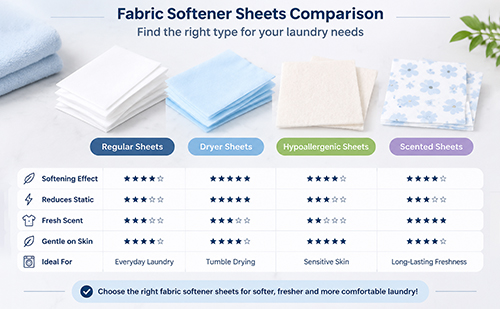
A visual comparison of different fabric softener sheet options.
| Product Type | Product Positioning | Key Buyer Considerations |
|---|---|---|
| Conventional Dryer Sheets | Everyday fabric care | Sheet count, fragrance, dimensions and formula |
| Plant-Based Dryer Sheets | Plant-based formula positioning | Ingredient information and claim substantiation |
| Plant and Mineral-Based Dryer Sheets | Alternative formula positioning | Formula details and product specifications |
| Free and Clear Dryer Sheets | Specific fragrance or ingredient preferences | Fragrance status, ingredients and labeling |
| Pet Hair and Odor-Related Dryer Sheets | Specialized laundry care | Specific functional claims and usage instructions |
| Reusable Wet Dryer Sheets | Reusable wet sheet format | Reuse instructions, moisture retention and packaging |
This comparison is intended as a sourcing reference. The actual functions, ingredients and performance of each product should always be confirmed through its individual specification and sample evaluation.
3. Key Specifications Buyers Should Evaluate
Once the product direction has been selected, buyers should establish a clear specification. This helps suppliers prepare suitable samples and reduces misunderstandings during quotation and production.
3.1 Sheet Material and Dimensions
Confirm the sheet material, length, width and any relevant thickness or weight specifications. Buyers should also check whether the proposed sheet size is suitable for the intended usage instructions and package format.
3.2 Formula and Functional Requirements
Discuss the formula and the functions expected from the product. These may include fabric softening, static control, fragrance or other product-specific features. Ask the manufacturer what information or testing is available to support the proposed claims.
3.3 Fragrance Options
Fragrance can be an important part of a product's market positioning. Buyers may consider fresh, floral or other fragrance directions, depending on their target customers.
Request fragrance samples where available and confirm whether the selected option can be maintained according to the agreed product specification. For fragrance-free or other specific claims, verify the formula before finalizing the label.
3.4 Sheet Quantity and Usage Instructions
Sheet count is an important part of retail presentation, but it should be considered alongside the recommended usage. A package containing more sheets does not necessarily provide more uses if the product formats or instructions differ.
For reusable products, the stated reuse capacity and storage instructions should be clearly documented. For conventional sheets, confirm the recommended number of sheets per load and any relevant usage limitations.
4. Packaging and Private Label Considerations
Packaging is more than a visual element. It needs to protect the product, communicate the correct usage information and meet the requirements of the intended sales channel.
Before approving packaging artwork, buyers should review the following points:
- Package format: Confirm whether the product will use a box, pouch or another suitable packaging format.
- Pack quantity: Specify the number of sheets per retail unit and ensure it matches the product label.
- Product protection: Consider how the packaging will protect the sheets during storage and transportation. Reusable wet sheets may require particular attention to moisture retention.
- Branding and artwork: Confirm logo placement, colors, product descriptions and required label information.
- Market requirements: Review applicable ingredient declarations, warnings, usage instructions and other labeling requirements for the destination market.
For private label projects, it is useful to finalize the product specification and packaging requirements together. Changes to the formula, sheet dimensions or package quantity may affect the final artwork and quotation.
5. What Should Buyers Check When Choosing a Dryer Sheets Manufacturer?
A suitable dryer sheets manufacturer should be able to understand the product brief, explain available options and provide clear information throughout the sourcing process. Buyers can use the following checklist when evaluating suppliers.
5.1 Product Experience and Customization Scope
Ask whether the supplier has experience with the required dryer sheet format and which elements can be customized. Options may include fragrance, selected product specifications, package quantity, artwork and private label branding, depending on the product and project.
5.2 Sample Development and Approval
Request samples before confirming a bulk order. Review the sheet appearance, fragrance, packaging and usage experience. Any changes should be recorded and approved against a clear product specification.
5.3 Quality Control and Product Documentation
Ask how the supplier manages incoming materials, production checks and finished-product inspection. The specific control points will depend on the product type and manufacturing process.
Buyers should also confirm which product documents and test reports are available. Requirements may differ by destination market, product formulation and labeling claims.
5.4 MOQ, Lead Time and Order Planning
MOQ and lead time may vary according to the product format, formula, packaging materials and customization requirements. Confirm these details during quotation and ask whether packaging or raw material procurement affects the production schedule.
5.5 Communication and Project Follow-Up
Private label development usually involves several stages, including product selection, sample review, specification confirmation, artwork approval and order follow-up. Clear communication helps keep the project aligned from the initial inquiry through delivery.
6. Private Label Dryer Sheets with DR.EASY
DR.EASY offers a range of laundry care products for brands, retailers, wholesalers and distributors. Its fabric softener dryer sheet category includes conventional and specialty dryer sheet options, as well as reusable wet dryer sheets.
As an OEM and ODM manufacturer, DR.EASY supports private label projects with customization options across selected product and packaging requirements. Depending on the product, buyers can discuss formula positioning, fragrance, product specifications, packaging and branding.
To help assess a project, buyers can share the following information when making an inquiry:
- Preferred dryer sheet type and intended product positioning
- Target market and sales channel
- Expected sheet size and package quantity
- Fragrance or formula preferences
- Packaging design and private label requirements
- Estimated order quantity and target timeline
These details help establish the project scope and identify which product options are suitable for further discussion and sampling.
Explore the DR.EASY fabric softener dryer sheets range or visit our Laundry Care product category to learn more about related products.
Develop Your Private Label Dryer Sheet Product
Choosing the right dryer sheet format is the first step toward building a product that fits your brand and target market. A clear specification, sample evaluation and agreed packaging requirements can help make the sourcing process more straightforward.
Contact DR.EASY to discuss your private label dryer sheet requirements and explore suitable OEM/ODM options.
Explore DR.EASY Custom Solutions or Contact Our Team to start your project.
7. Frequently Asked Questions
Q1: What types of dryer sheets are available for private label projects?
Options may include conventional fabric softener dryer sheets, plant-based and plant-and-mineral-based products, Free and Clear options, specialty sheets for pet hair or odor-related laundry care, and reusable wet dryer sheets. Availability and specifications should be confirmed with the manufacturer.
Q2: Can dryer sheets be customized with a private label?
Private label projects may include branding, packaging, fragrance and selected product specifications. The available customization options depend on the product format, formula and order requirements.
Q3: What is the difference between conventional and reusable wet dryer sheets?
Conventional dryer sheets are generally designed for use during a drying cycle, while reusable wet dryer sheets are developed for repeated use according to their instructions. Their formulas, packaging and storage requirements may differ.
Q4: What is the MOQ for private label dryer sheets?
MOQ depends on the product type, formula, packaging and customization requirements. Buyers should provide their preferred specifications and estimated quantity to receive a project-specific quotation.
Q5: Can buyers request samples before placing a bulk order?
Sample evaluation is an important step in private label sourcing. Buyers can discuss sample availability with the manufacturer and review the product format, appearance, fragrance, packaging and usage instructions before approving the final specification.
Q6: What information should buyers prepare when contacting a dryer sheets supplier?
Prepare the preferred product type, target market, sheet dimensions, package quantity, fragrance or formula requirements, packaging preferences and estimated order quantity. This information helps the supplier understand the project and provide a more relevant response.
Q7: What should be checked before approving the final dryer sheet product?
Check the product specification, sample, formula information, sheet dimensions, fragrance, usage instructions and packaging artwork. Any functional or environmental claims should also be reviewed against the available supporting information before the product is approved.